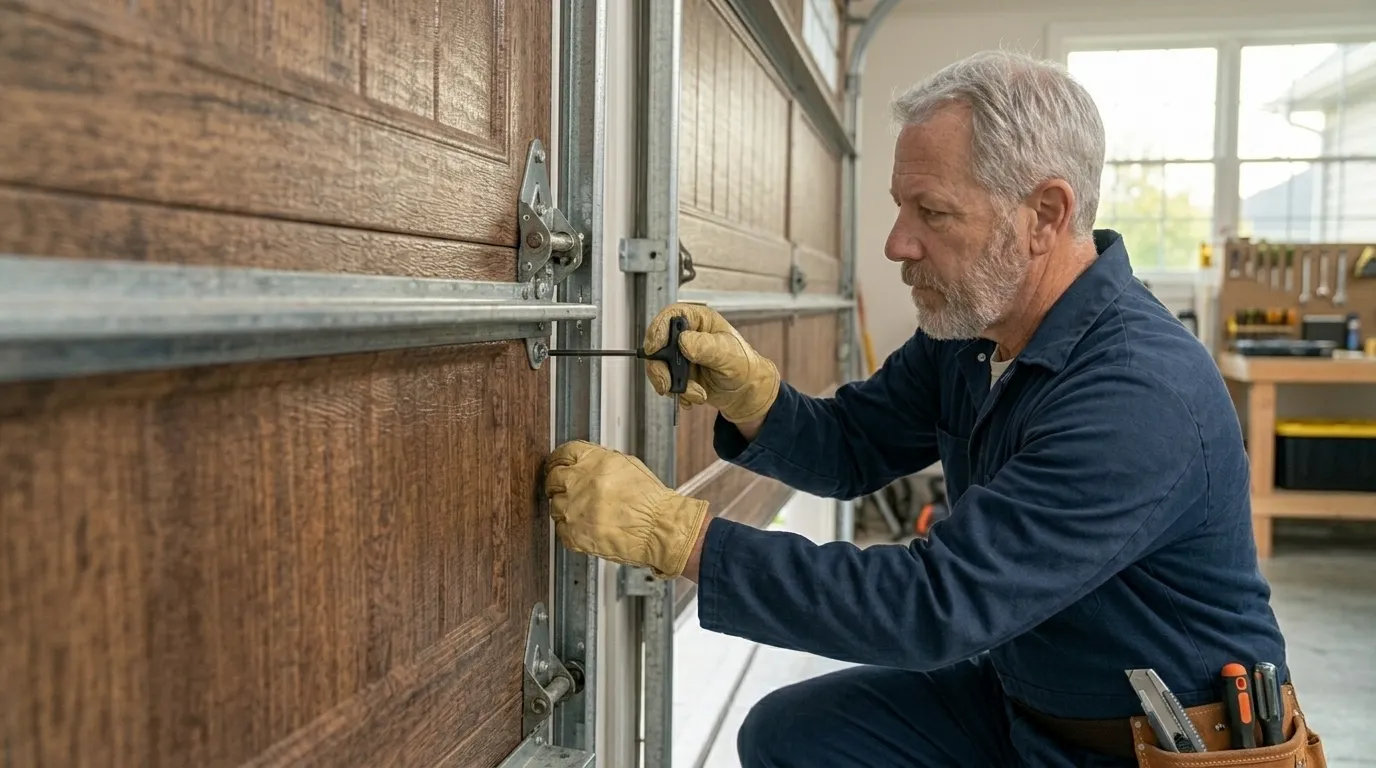
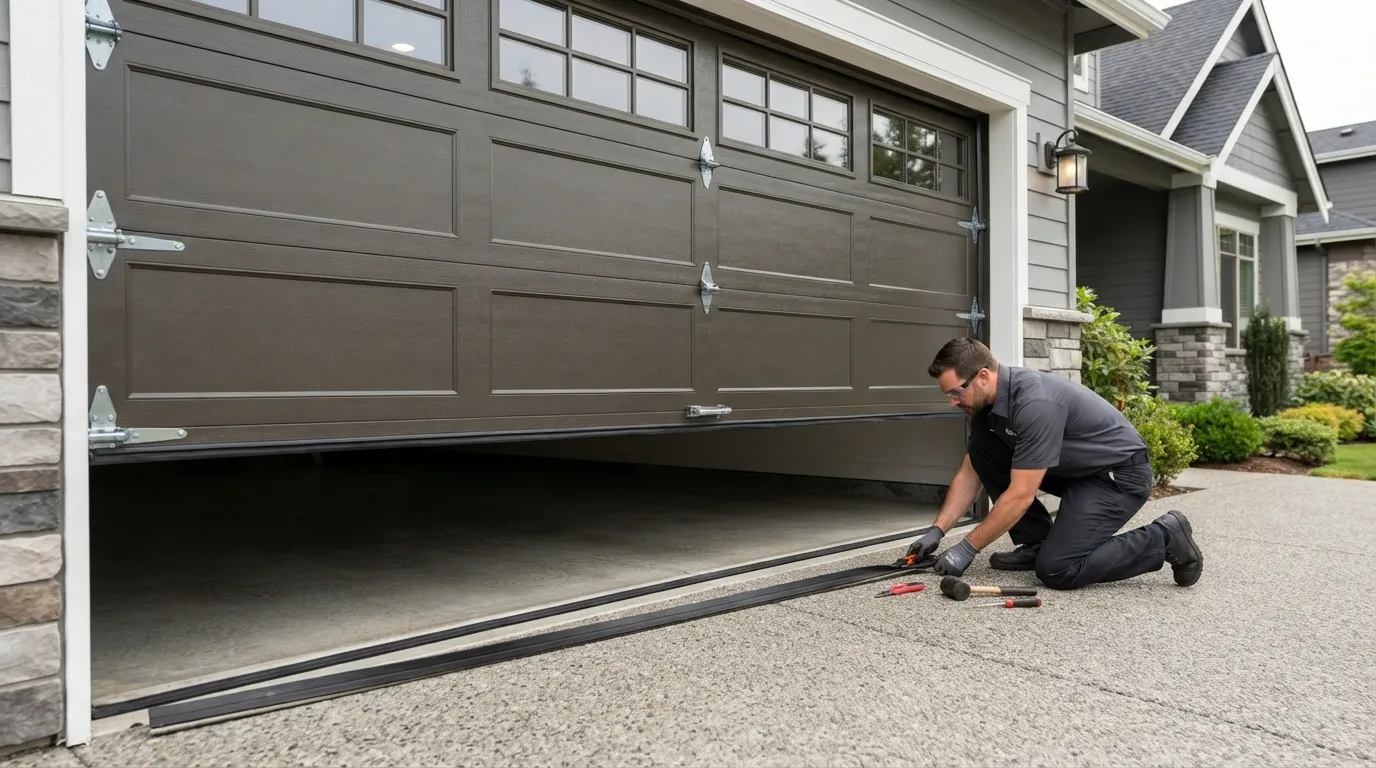
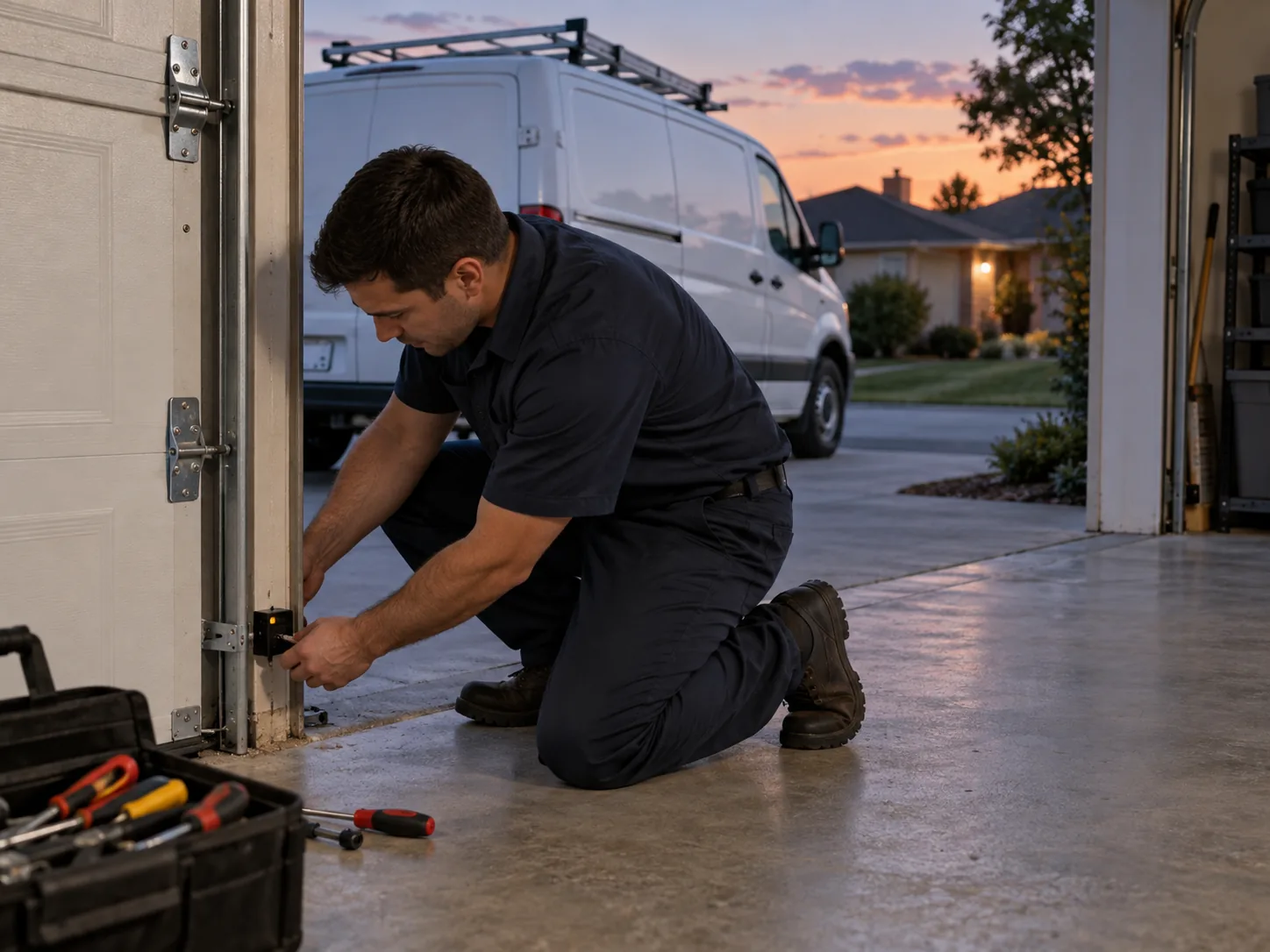
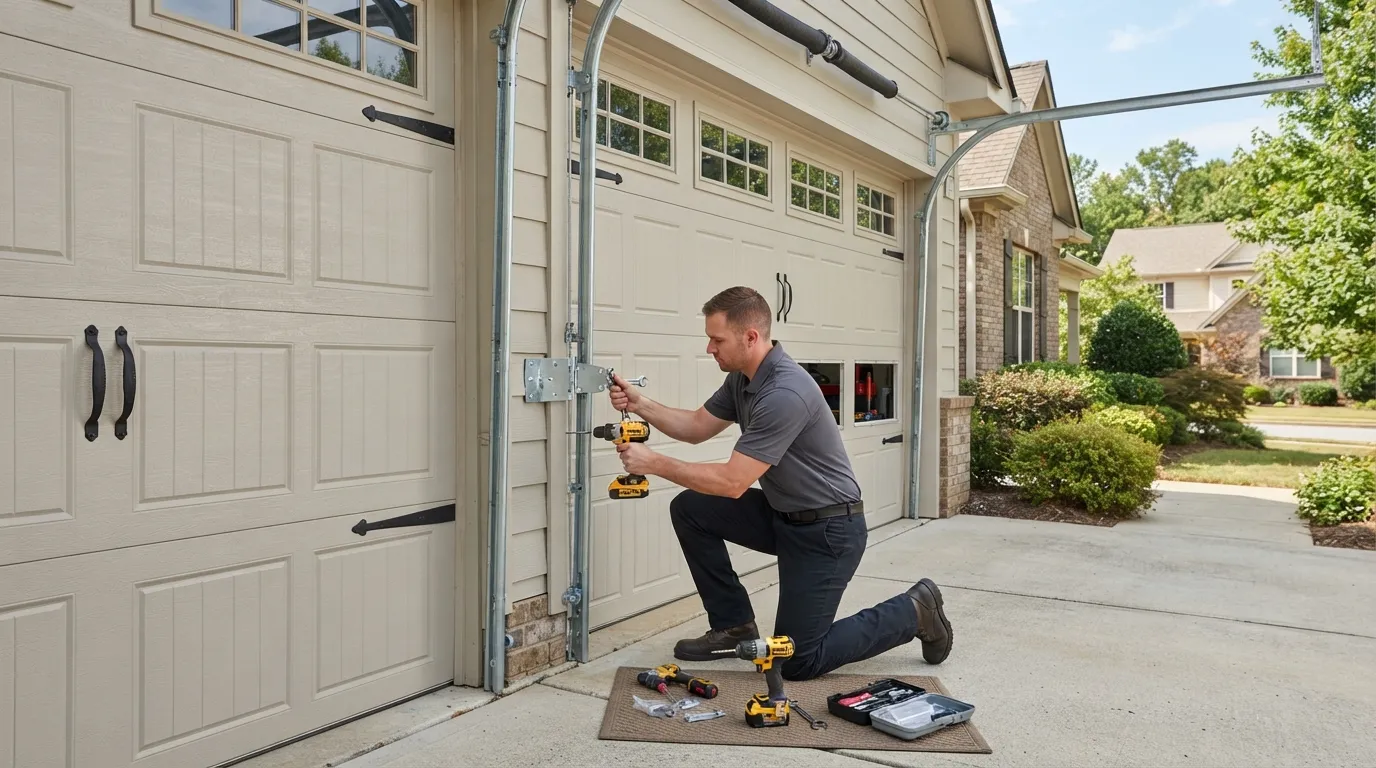
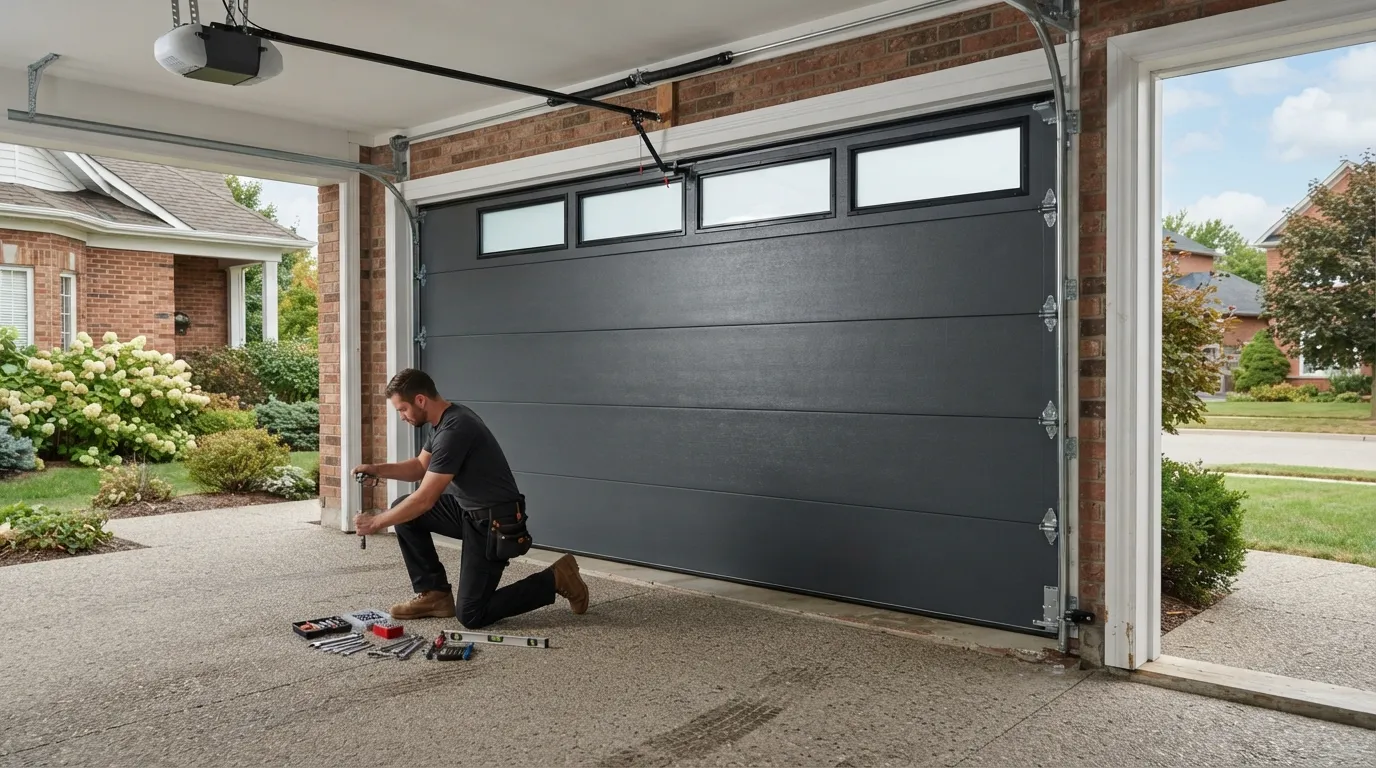
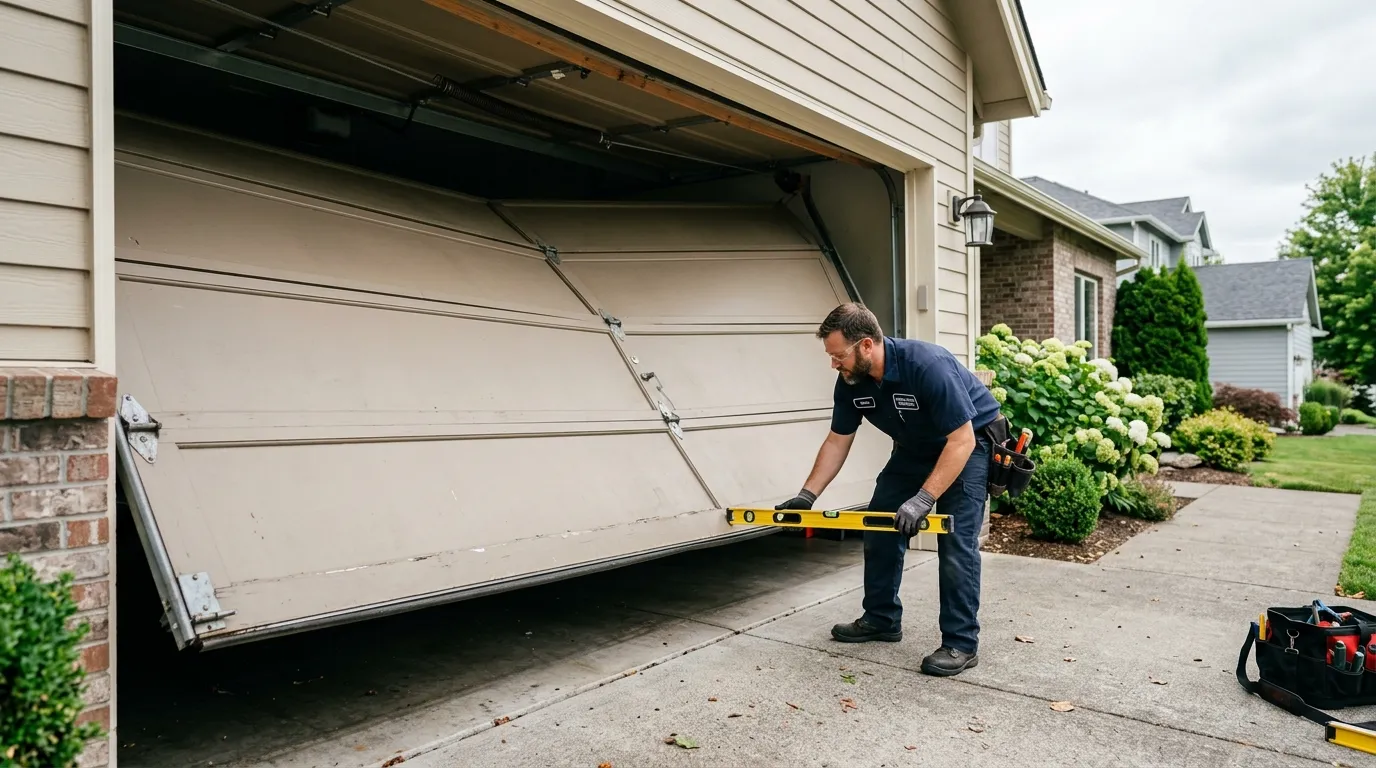
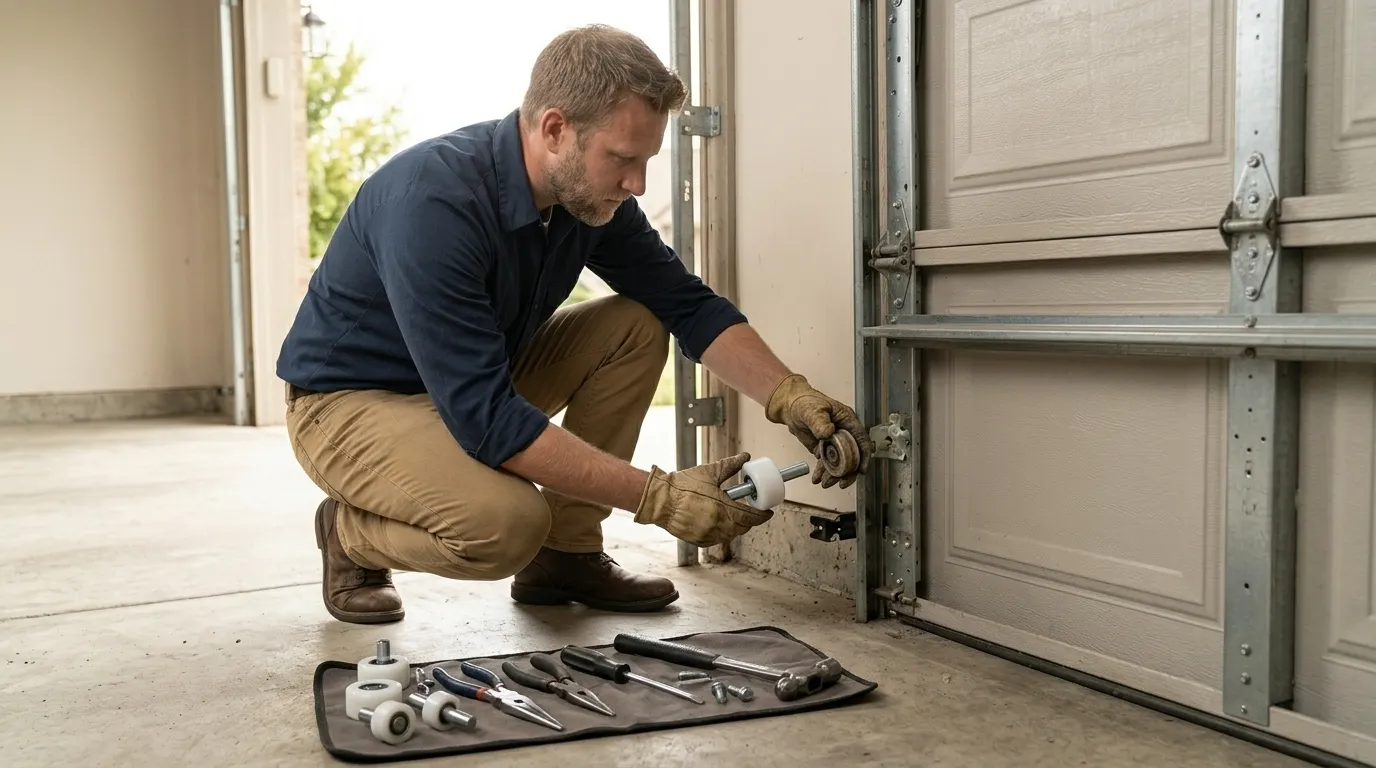
A torsion spring holds enough stored force to break a hand or worse, and that doesn't change based on how new or expensive the door is - we won't walk anyone through replacing one over the phone, full stop. Where DIY is fine: cleaning and lubricating rollers and hinges, checking that photo-eye sensors are aligned and free of dust, and tightening loose bolts on the track brackets. Where it isn't: springs, cables, and anything involving the opener's internal wiring, especially on newer belt-drive units where the electronics are more sensitive than the older chain-drive motors. Given that we're driving in from Arlington, it doesn't make sense to call us out for a five-minute sensor wipe - try that yourself first. But if the door is heavy, insulated, and installed within the last two decades like most in this area, the repair-or-replace math tips toward replacement sooner than it would on an older, lighter door, simply because the parts and labor cost more relative to a new unit. We'll tell you honestly when that line has been crossed instead of repairing something that should be replaced.