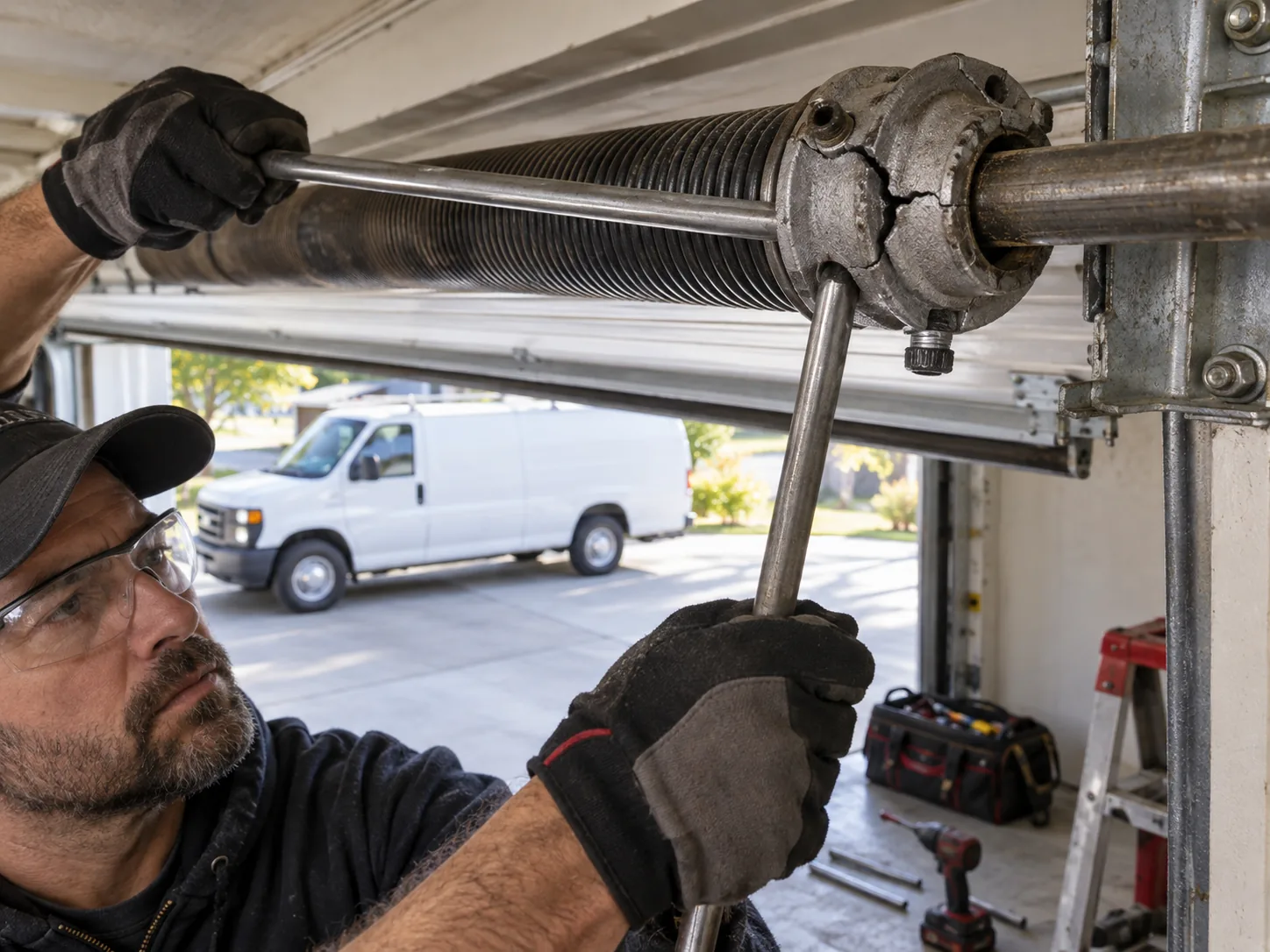
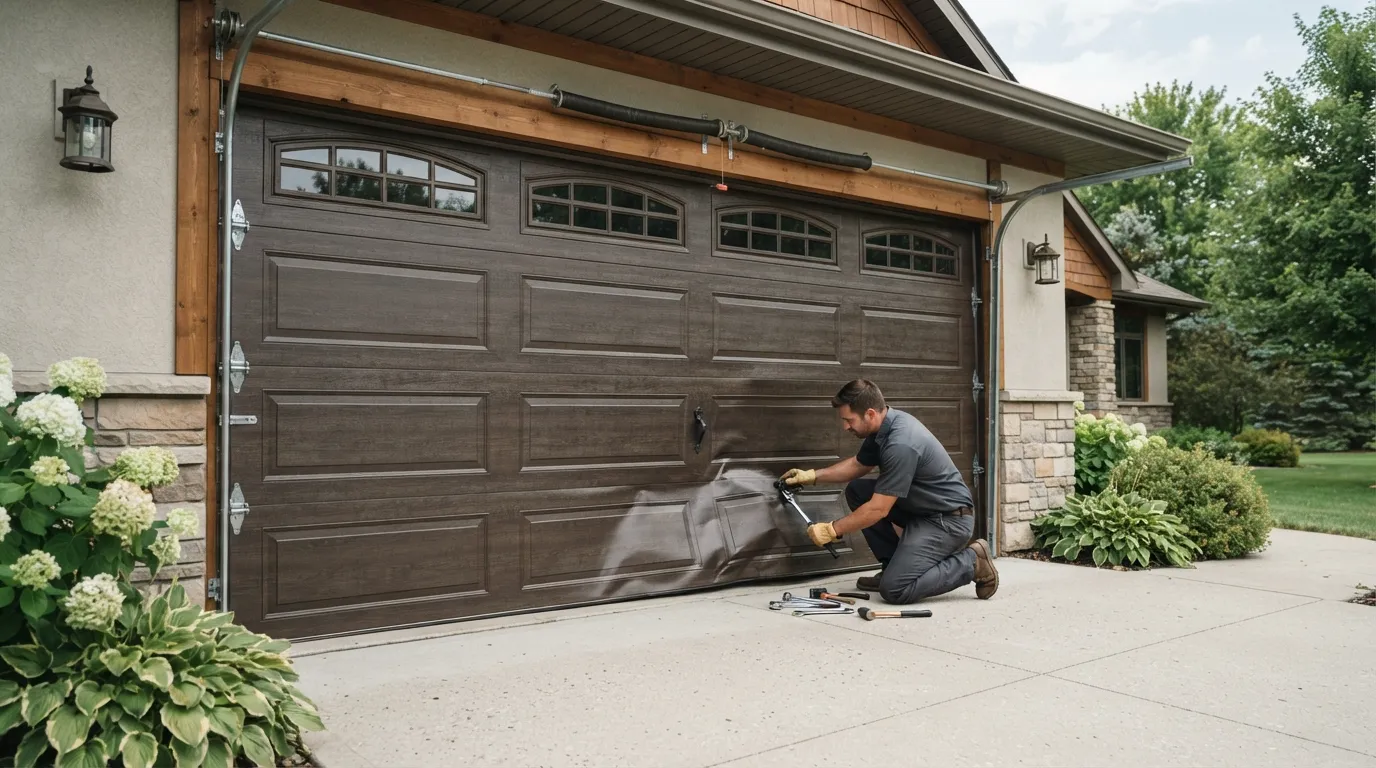
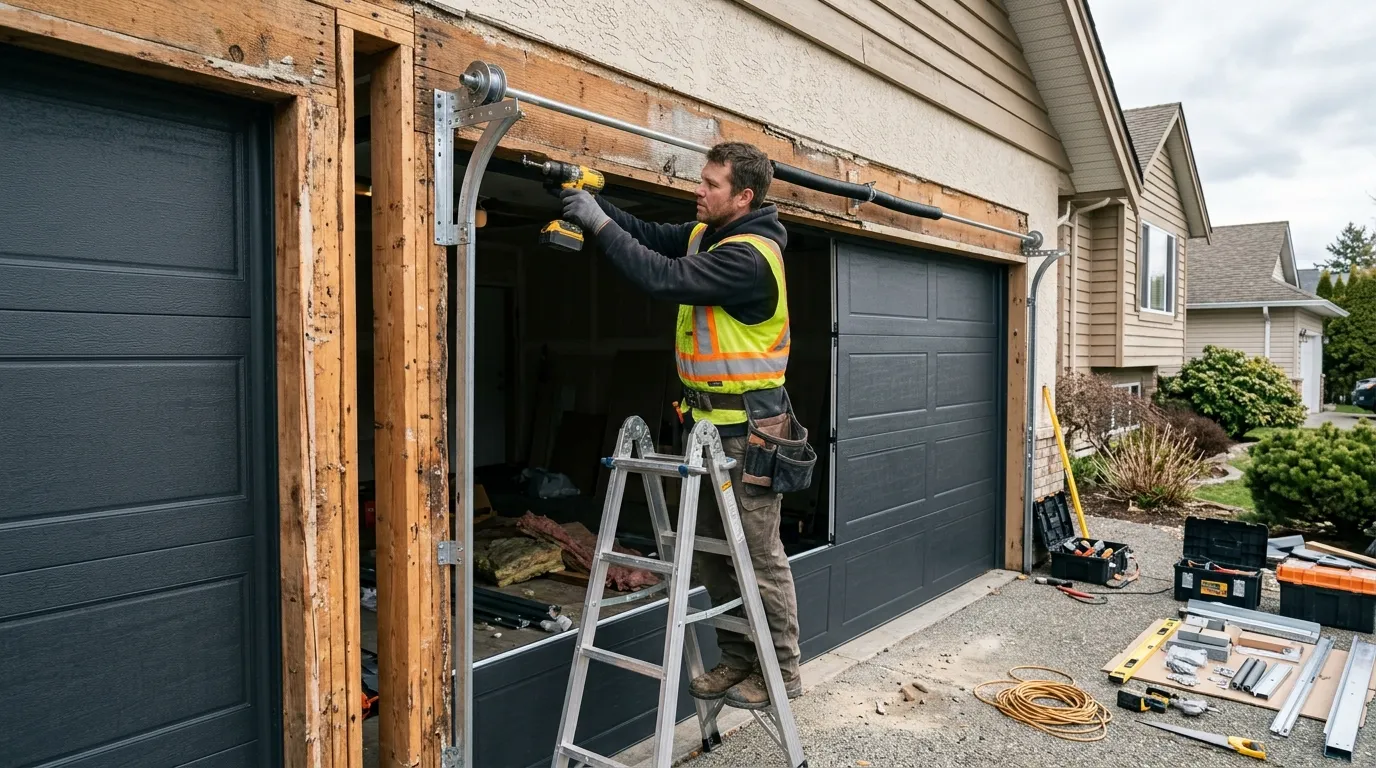
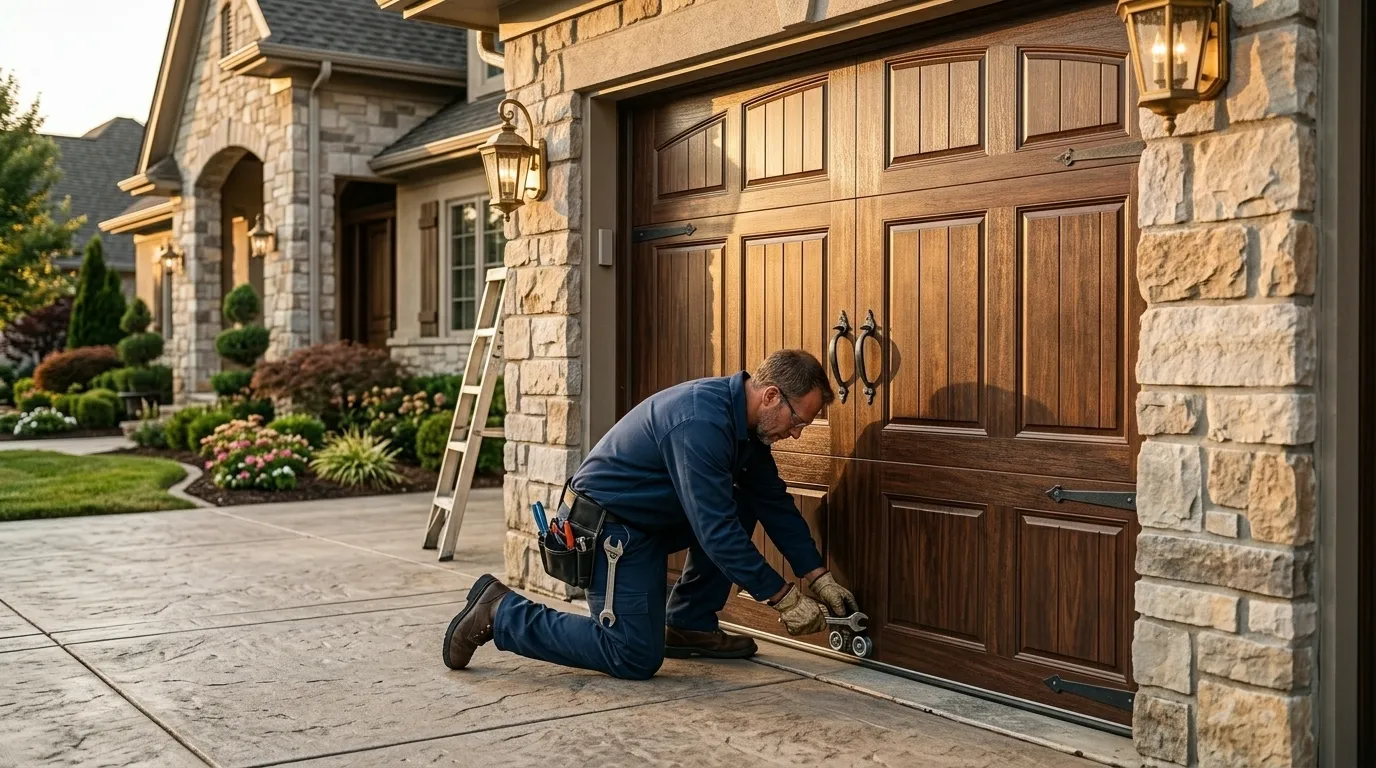
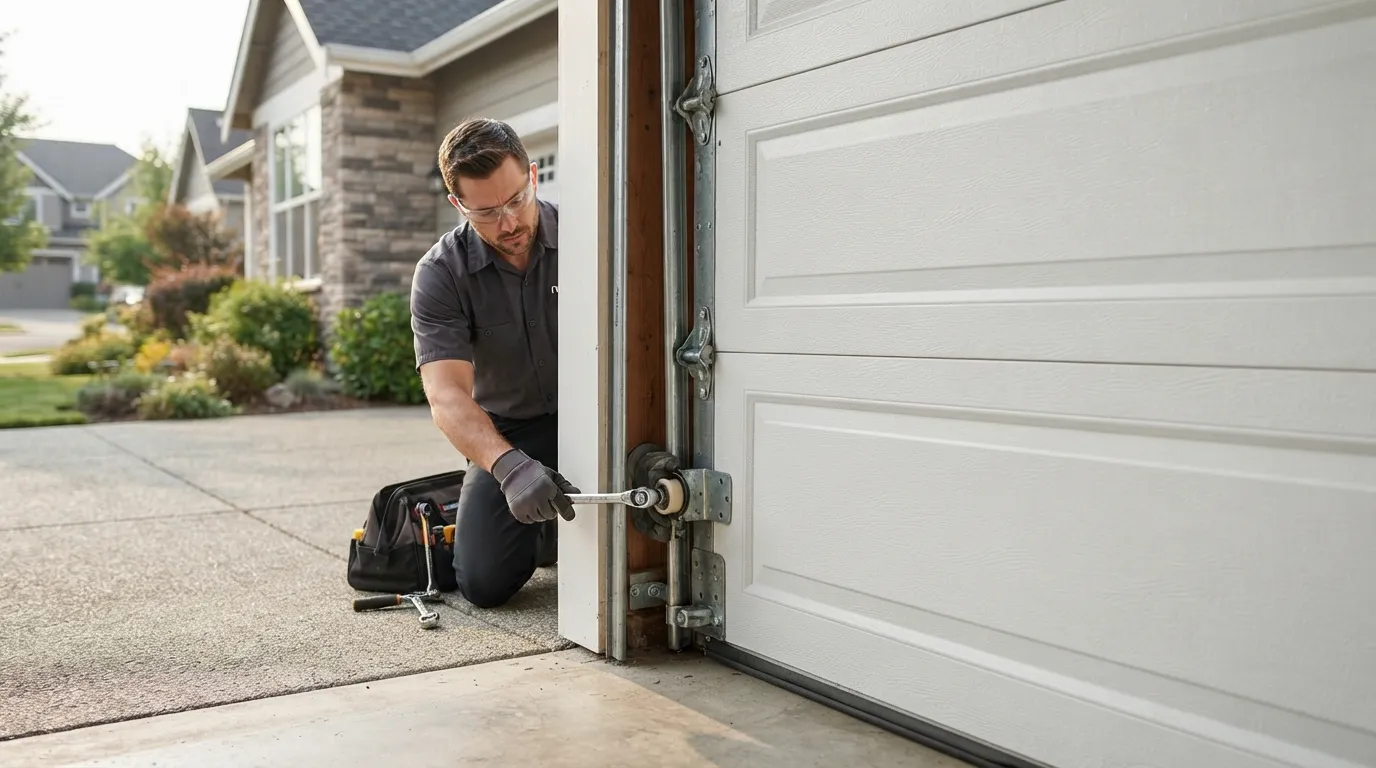
Arlington's housing runs from 1953 through 2014, but the bulk of it went up in the 1980s and 90s, spread across the area's 22 named neighborhoods. That matters for one reason: torsion springs, rollers, and openers all have a rated life, and a huge share of the doors on this side of town are hitting that wear point at roughly the same time. A spring wound in 1988 was never built to last past 2020, no matter how well the door was maintained.
Heat speeds this up. Arlington sits in a moderate-to-hot climate band, and the summer swing between a hot slab and a cooler evening flexes steel panels and dries out the grease packed into spring coils and roller bearings. On an older door, that daily flex works on hardware that's already thirty-plus years old. You get the same failure you'd see anywhere eventually, but here it shows up earlier and more often because the age of the housing stock and the climate load are stacked on top of each other.
With around 97,142 owner-occupied houses across the service area, that's a lot of doors built in the same twenty-year window, aging out at once.