Blinking-light failure indication
If you're calling about a door that won't close and the opener light is blinking, that's useful to know when we ask what time works. The bigger complication is the housing stock itself.
Keller, Arlington
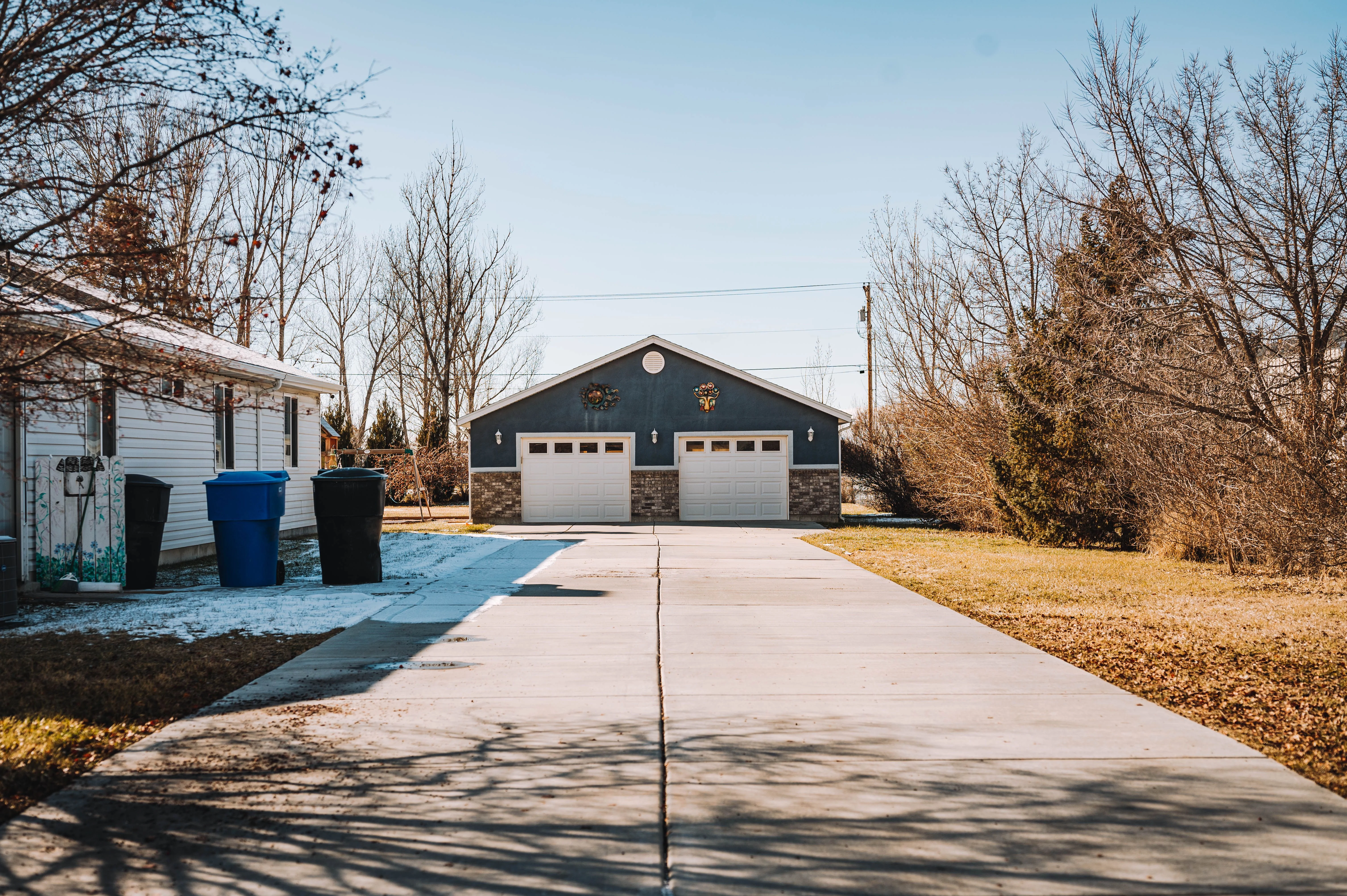
Keller homes mostly went up after 1999 - newer openers, different failure points than the rest of the service area. We drive the 17 miles from Arlington for the call.
Watch-outs
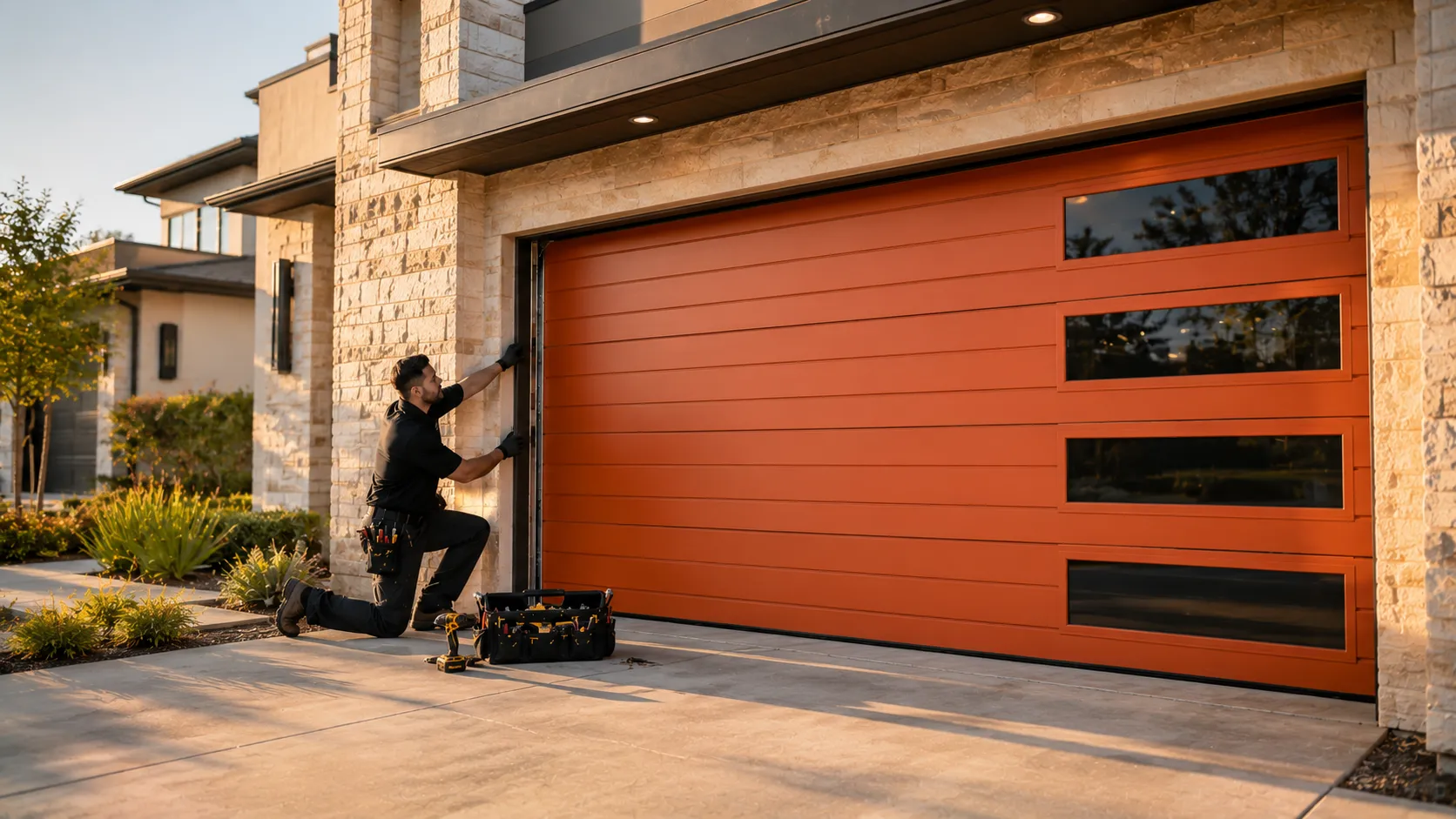
Keller is 17 miles out from Arlington, the longest run on our map for this service. That distance doesn't change what we fix, but it changes how the day gets planned - a Keller call gets scheduled with the drive built in, not squeezed between two closer jobs.
If you're calling about a door that won't close and the opener light is blinking, that's useful to know when we ask what time works. The bigger complication is the housing stock itself.
Across the wider service area homes went up anywhere from 1953 to 2014, with a lot of older torsion setups and springs sized for hardware nobody sells new anymore. Keller doesn't have much of that.
Most of what's here went up after 1999, which means you're dealing with a different generation of door and opener than a lot of our other calls - newer track, newer drive systems, different failure points entirely.
Our process
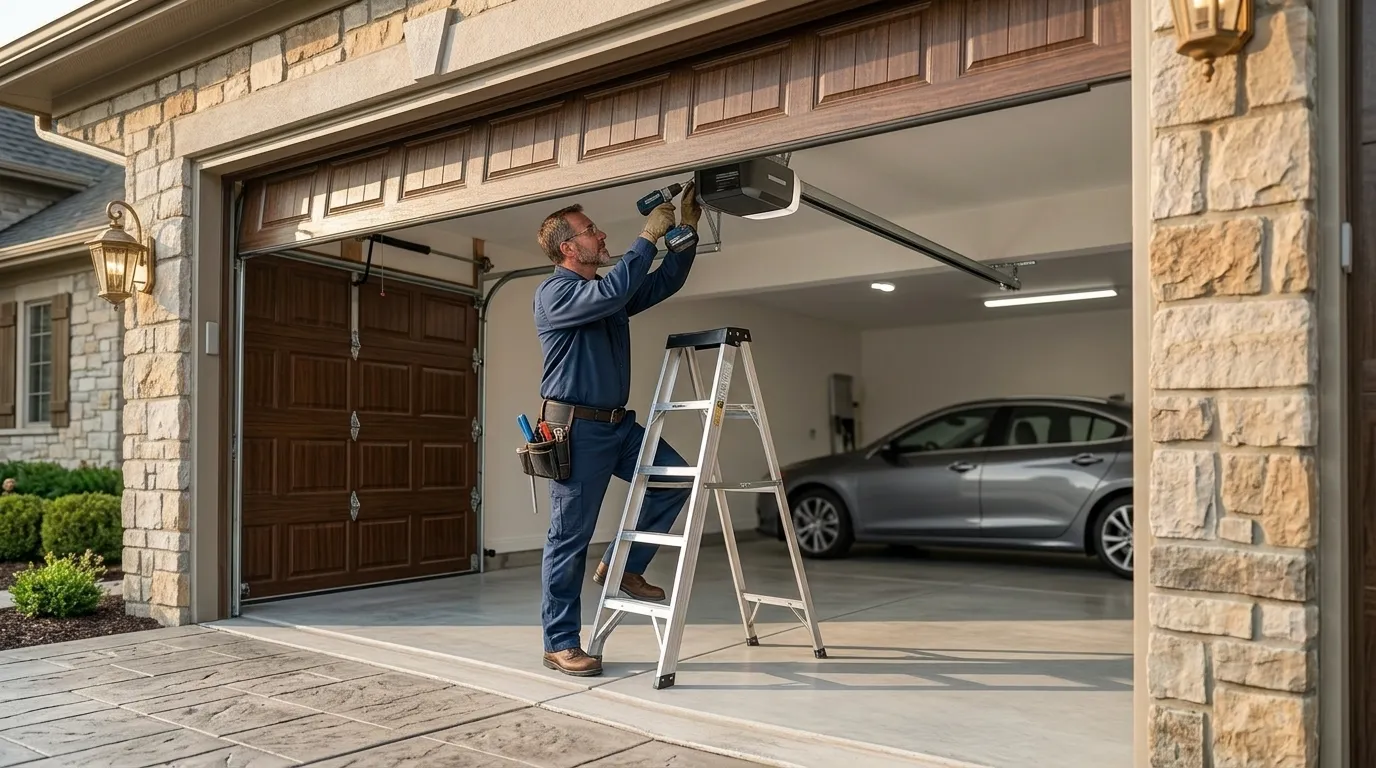
On a newer build like most of what's in Keller, the fix is rarely about hunting down obsolete parts. Post-1999 openers are mostly chain or belt drive with photo-eye safety sensors built in from the factory, and torsion springs on standard shaft sizes that we carry stock for. That means less time spent sourcing and more time spent diagnosing - is it the sensor alignment, a worn roller, a spring that's simply reached its cycle limit.
We test the door under load before we touch anything: balance, travel, reversal. On newer housing stock the failures we see are usually wear-and-tear rather than the era-specific quirks that show up on older torsion setups elsewhere in the service area. That keeps most jobs to a single visit once we're on site, though we won't quote a repair time before we've looked at the door.
Warning signs
On a door built after 1999 with a factory opener, the first sign of trouble is usually the opener itself, not the springs.
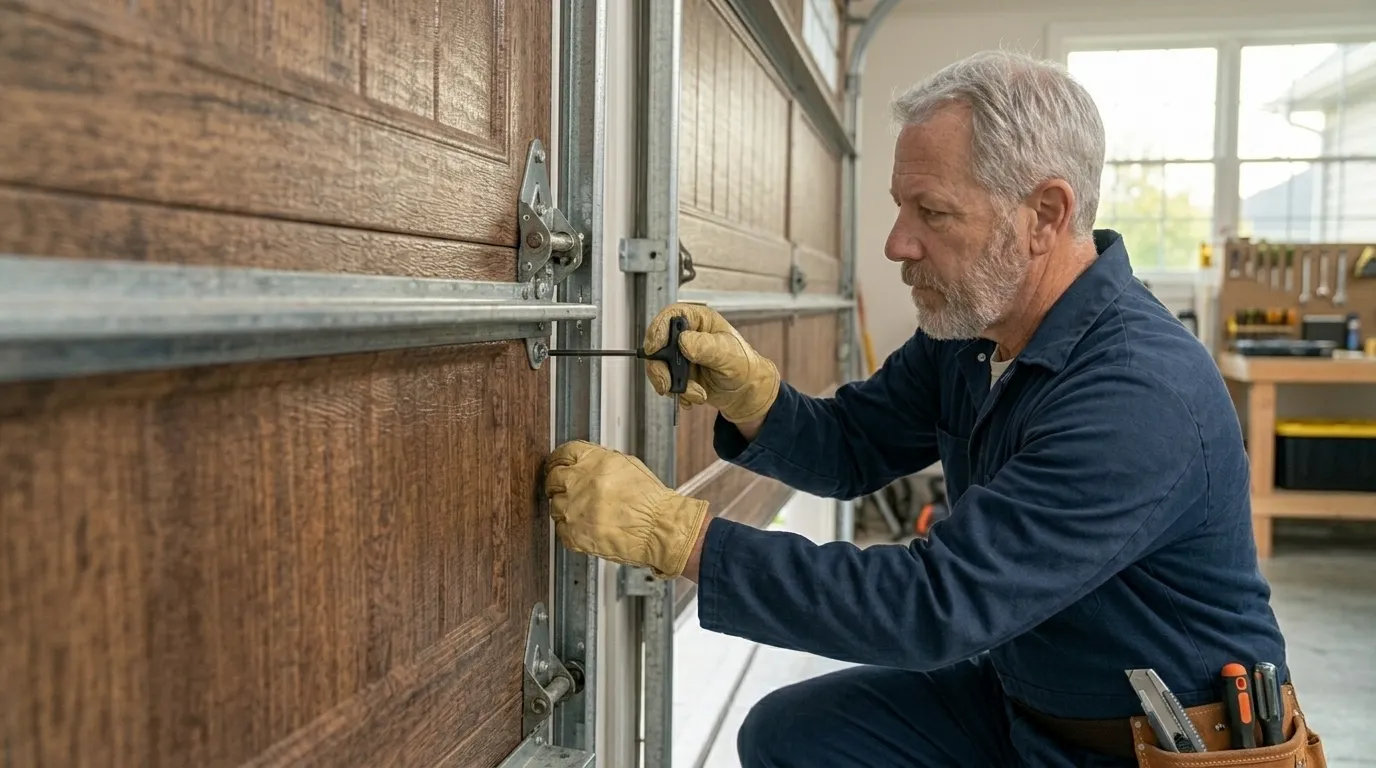
You'll hear the motor run longer than it used to before the door moves, or the door reverses partway up for no obvious reason - often a sensor knocked out of alignment rather than a mechanical fault. Because the springs and hardware on this generation of build are still within their expected service life for most Keller houses, a spring snapping outright is less common here than it is on the older stock we see closer to Arlington.
What you're more likely to notice is a cable starting to fray at the drum, or a roller that's worn enough to rattle in the track. Both show up as noise before they show up as a stuck door, which is the window where a call is cheaper than a replacement.
Local causes
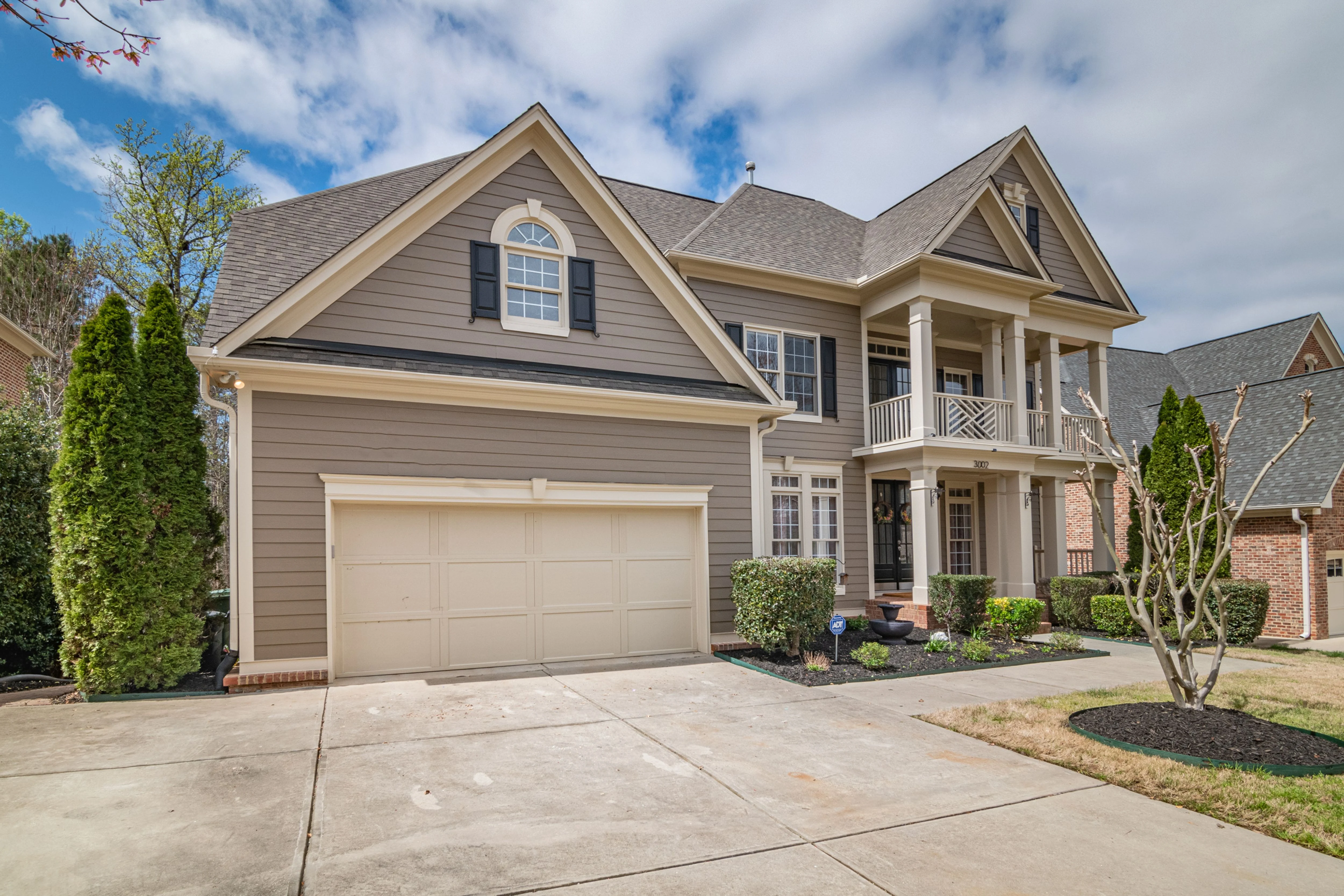
The service area runs from houses built as early as 1953 up through 2014, but Keller's stock sits later in that range - most of it built from 1999 on. That matters because federal safety standards for garage door openers, including required photo-eye reversal sensors, were already in force by then. Doors here mostly came with that hardware from day one rather than having it retrofitted, which changes what actually fails.
The area also runs a moderate heat climate band, which over twenty-plus years of summers does wear on nylon rollers and rubber weatherstripping even on newer builds - it's slower wear than sudden failure, but it adds up. Median household income here runs $172,654, well above the $84,552 figure for the wider service area, and homeowners in this range tend to call at the first odd noise rather than wait for a full breakdown, which is part of why we see fewer catastrophic spring failures out here.
DIY or pro
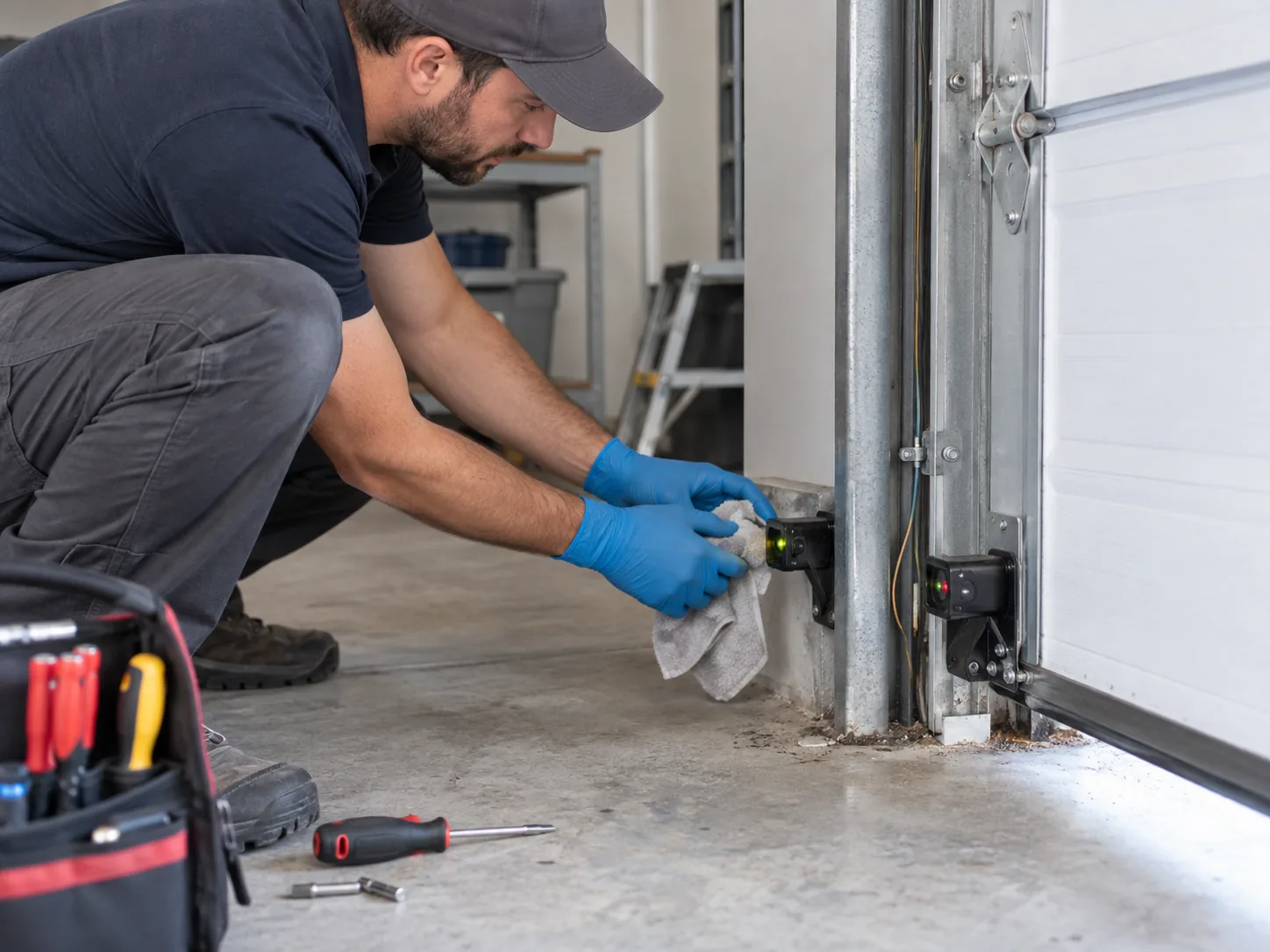
A sensor knocked out of alignment is a real DIY fix - clean the lenses, make sure both eyes are pointed at each other and level, and the door will usually reverse normally again.
That's a five-minute job and we'd rather you save the call. What we don't recommend doing yourself: adjusting torsion spring tension, or trying to realign a track that's bent from a car bumping the door.
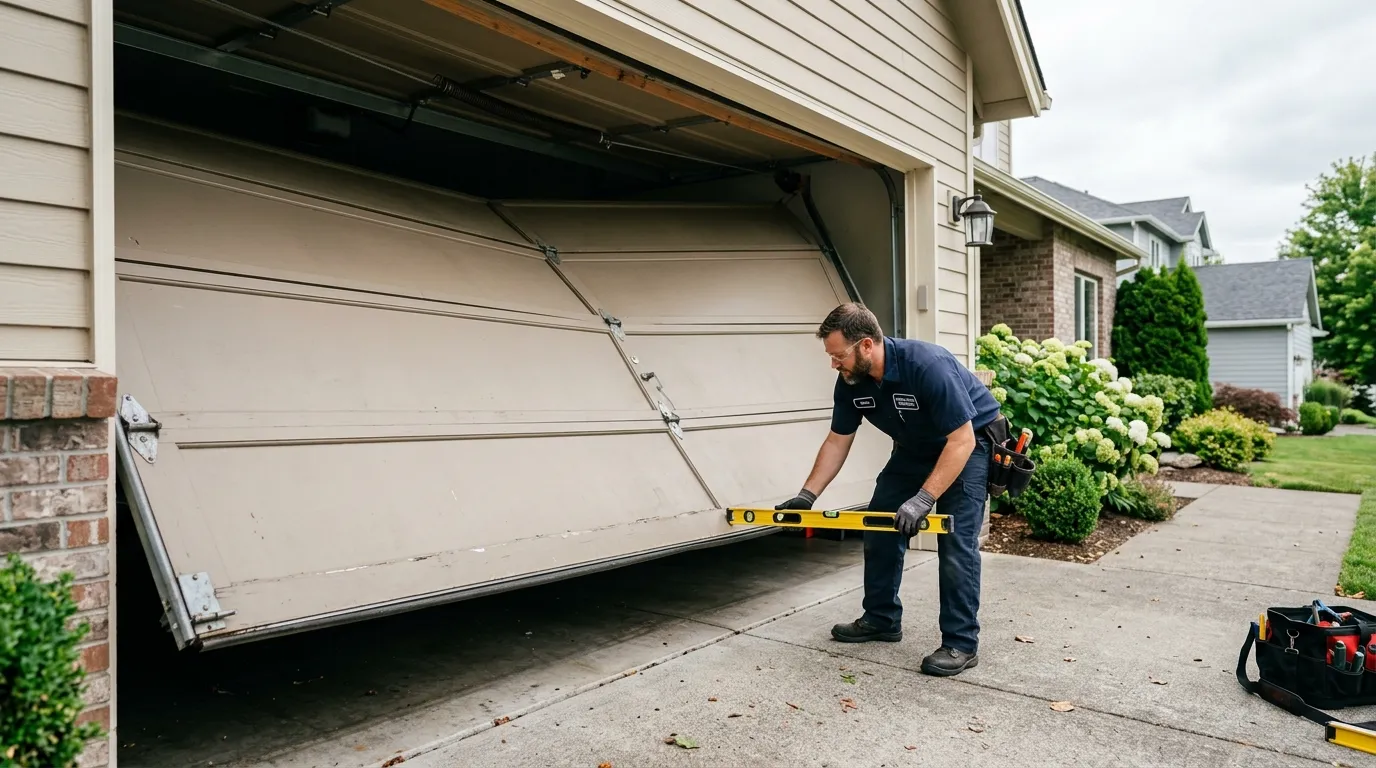
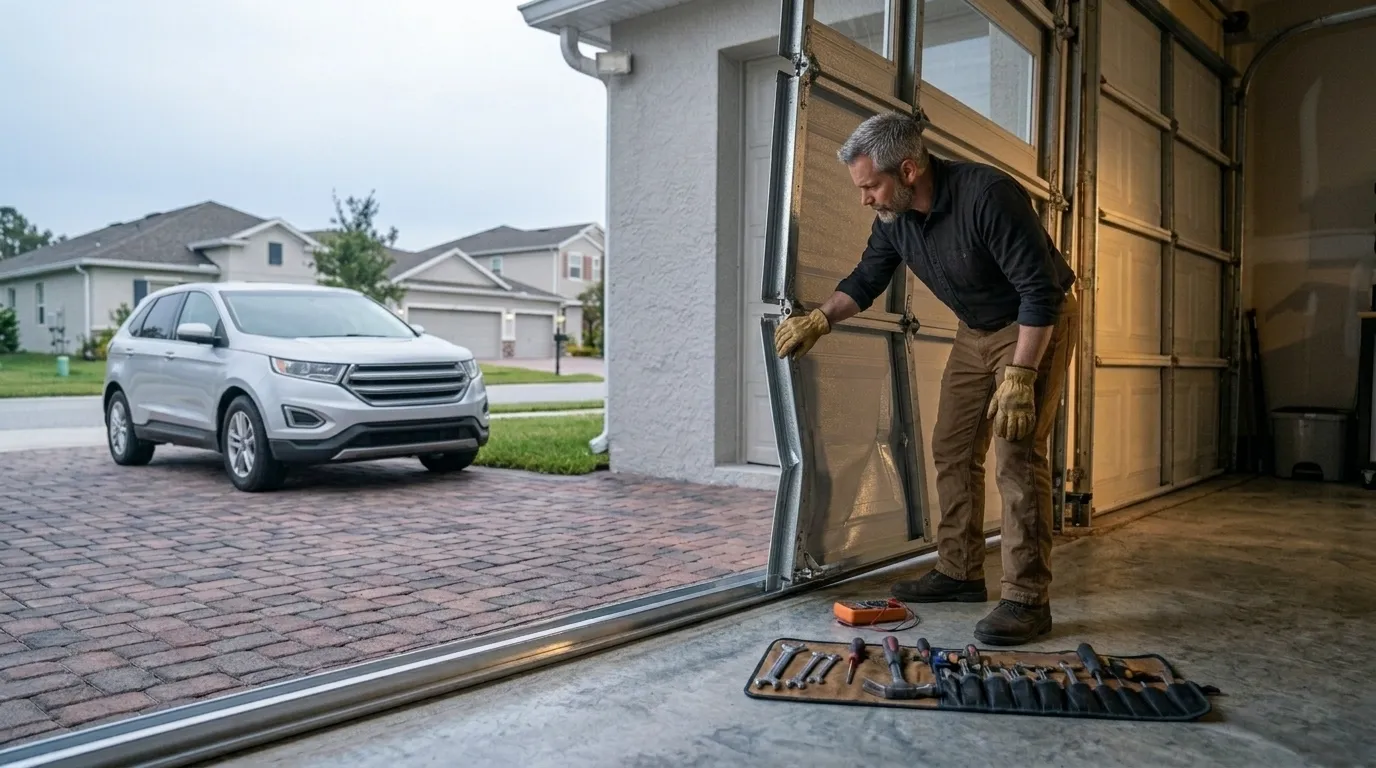
Torsion springs store enough force to cause a serious injury if the winding cone slips, and a bent track usually needs the door off its rollers to fix properly. If the door is heavier to lift by hand than it used to be, that's a spring losing tension - not a job for a Saturday afternoon.
Pricing
We don't have a set price list to quote here, and pricing depends on what's actually wrong once we're on site - sensor alignment costs a fraction of what a spring replacement does, and a new opener is its own conversation. What we can tell you is that the newer hardware common in Keller houses tends to mean simpler jobs: parts are current, not discontinued, and repairs don't usually turn into a full-system replacement the way they sometimes do on older torsion setups.
The honest limitation: because Keller is 17 miles from Arlington, we build that drive into scheduling rather than treating it like a next-door call. If timing matters for you, say so when you book and we'll work around it.
Questions
About 17 miles. We don't have a branch in Keller - every job here is a drive out from Arlington, which we account for when we schedule rather than promising a same-hour arrival.
Most Keller homes were built from 1999 onward, later than a lot of the service area's 1953-2014 range. That means standard-shaft torsion springs and factory-installed safety sensors rather than the older, harder-to-source hardware we see on older builds.
Not always, but on newer builds like most of what's in Keller, a blinking light usually points to the photo-eye sensors being misaligned or dirty rather than a mechanical failure. Check that both lenses are clean and facing each other before assuming it's the opener itself.
Explore more
Ready when you are
Arlington Garage Door Pros repairs and installs garage doors, springs and openers in Arlington, TX and the surrounding area.